Travel guide · 5 min read
What to Pack for a Sahara Desert Tour in Morocco
Written by the Kasbah Trails team
Published
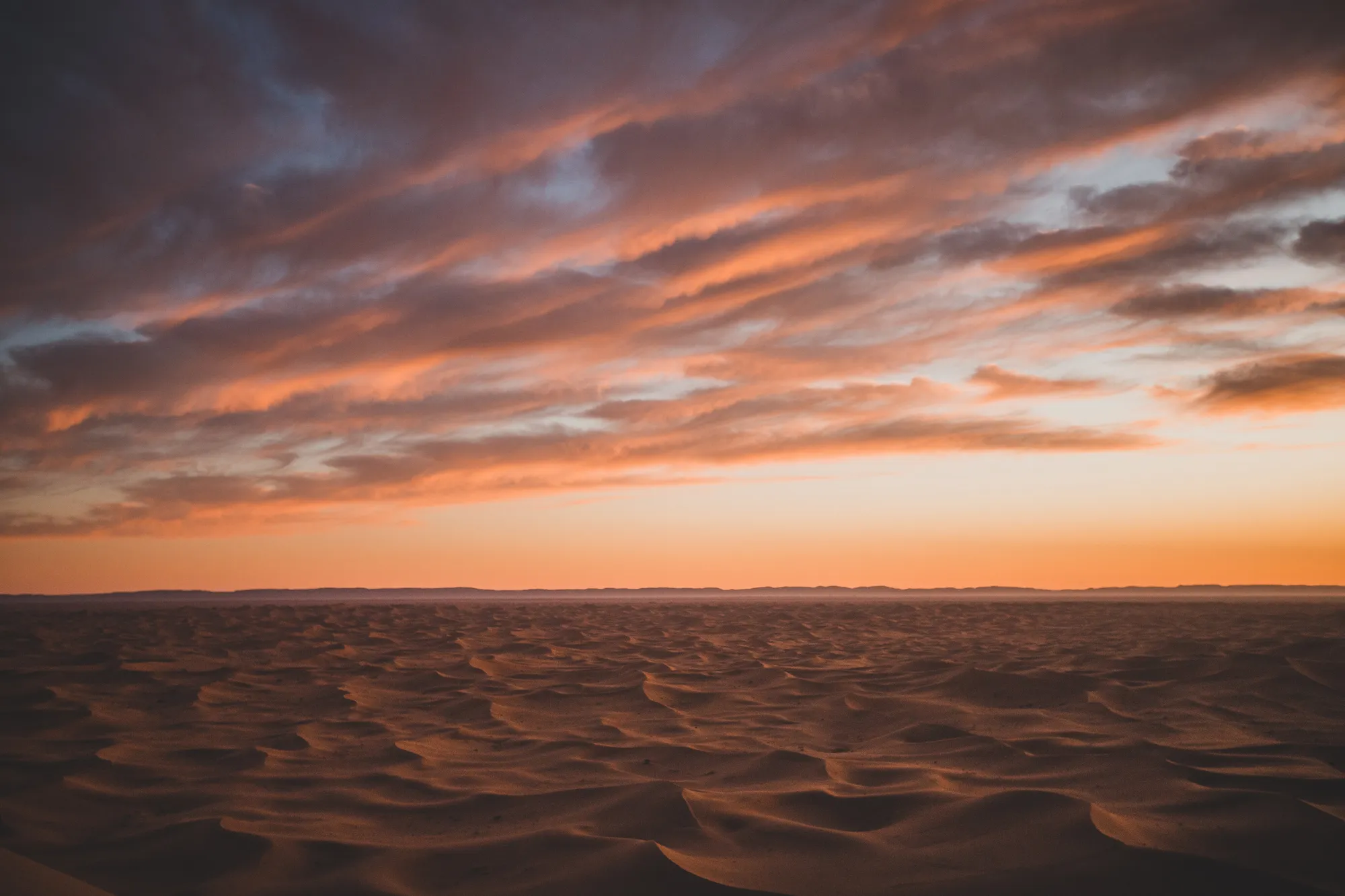
The Sahara's day-to-night temperature swing catches more travellers off guard than anything else about a desert tour — shorts-and-sunscreen weather by afternoon, genuine jacket weather two hours after sunset. Here's what actually earns a place in your bag, and what you can safely leave at the riad.
Layers, always layers
Desert days can be hot even outside summer, and desert nights drop fast once the sun sets — sand has almost no ability to hold onto heat, so the swing between the two can be dramatic even within a single evening. A light long-sleeve layer for sun protection during the day, a warmer fleece or jacket for after dark, and a scarf or shemagh that doubles as both sun and wind protection cover most conditions you'll actually meet. See our best-time-to-visit guide for how much colder to expect by season.
Sun protection that actually works
A wide-brimmed hat beats a cap in open dunes, since there's no shade anywhere to duck into and a cap leaves your ears and neck exposed. Sunscreen matters more than usual given how much reflected sun comes off pale sand from below as well as above, and sunglasses with real UV protection aren't optional — the glare off the dunes at midday is intense enough to give you a headache within the hour if you skip them.
For the camel trek and camp
Closed shoes you don't mind filling with sand — it happens regardless of footwear choice, so don't bother hunting for the mythical sand-proof boot — plus a change of socks, and a headlamp or phone flashlight for moving around camp after dark, since desert camps generally run on limited generator or solar power rather than a lit path to every tent. See our camel trekking guide for what the trek and camp night actually involve.
The small stuff people forget
A portable phone charger or power bank, since camp power is limited and shared among everyone staying that night. Wet wipes, since running water at camp is basic at best. And a dust-resistant bag or cover for cameras and phones — fine Sahara sand finds its way into any zip, seam or lens left open, and it travels further than you'd expect on even a still night.
If your route also crosses the High Atlas beforehand, layer for the mountain pass too — the Tizi n'Tichka can be properly cold at altitude even on days when Merzouga itself is warm, so don't pack everything warm at the bottom of the bag assuming you'll only need it once you reach the dunes.
Related reading
6 min readBest Time to Visit the Sahara Desert in Morocco (Month by Month)
When to go to the Erg Chebbi dunes near Merzouga — temperatures, crowds and what a desert camp night actually feels like in each season.
6 min readCamel Trekking in Merzouga: What Actually Happens on a Desert Camp Night
A walk-through of what a Merzouga camel trek and Sahara desert camp night actually involve, from sunset ride to sunrise over the dunes.
 6 min read
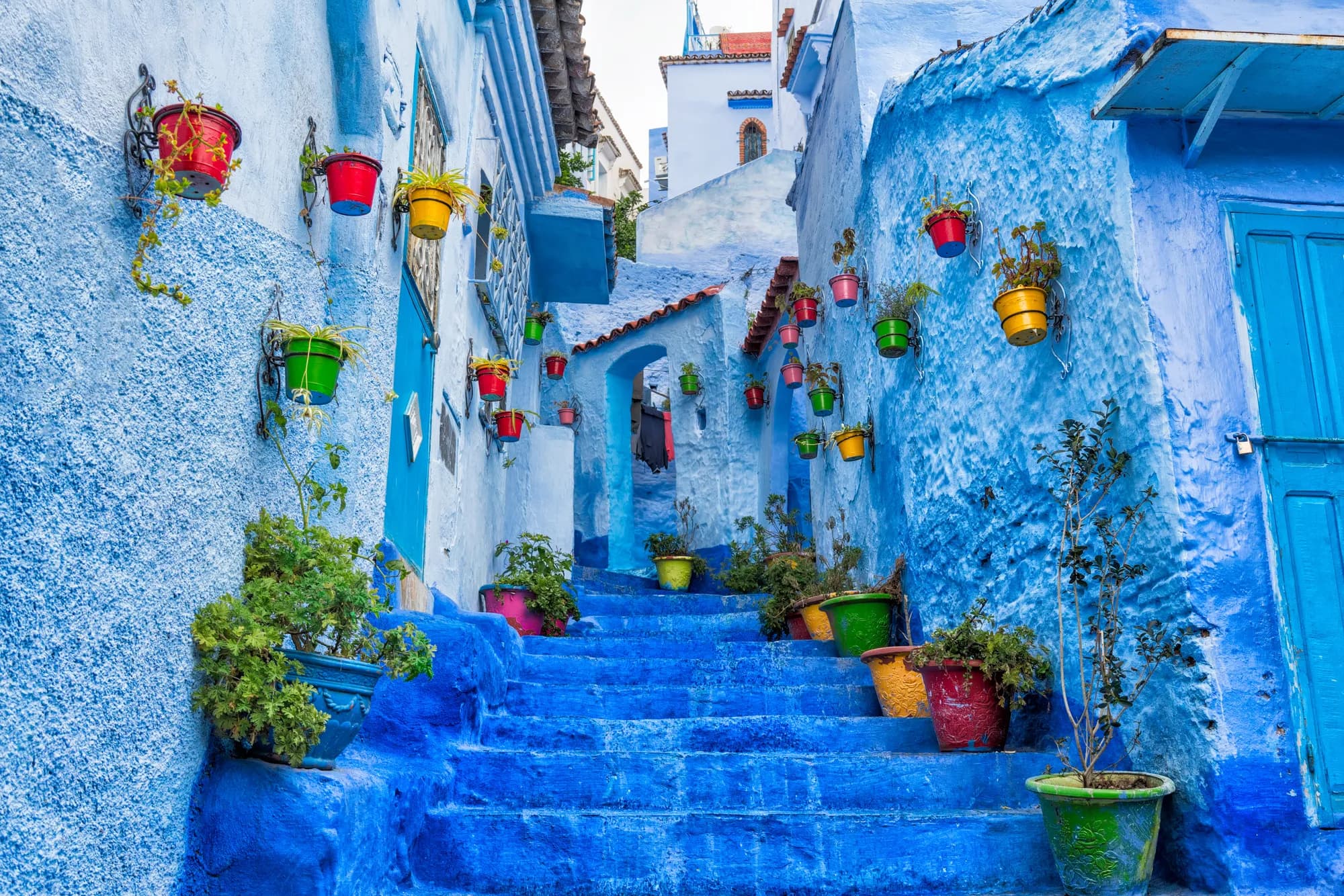
Morocco in Winter: What to Expect and How to Pack
Traveling Morocco between November and February — mountain snow, desert cold nights, coastal mildness, and how to pack for all three in one trip.
Begin your journey
Ready to see this in an itinerary?
Browse all 33 private Morocco journeys, or message us with your dates for a route built around this trip.