Travel guide · 6 min read
Best Time to Visit the Sahara Desert in Morocco (Month by Month)
Written by the Kasbah Trails team
Published
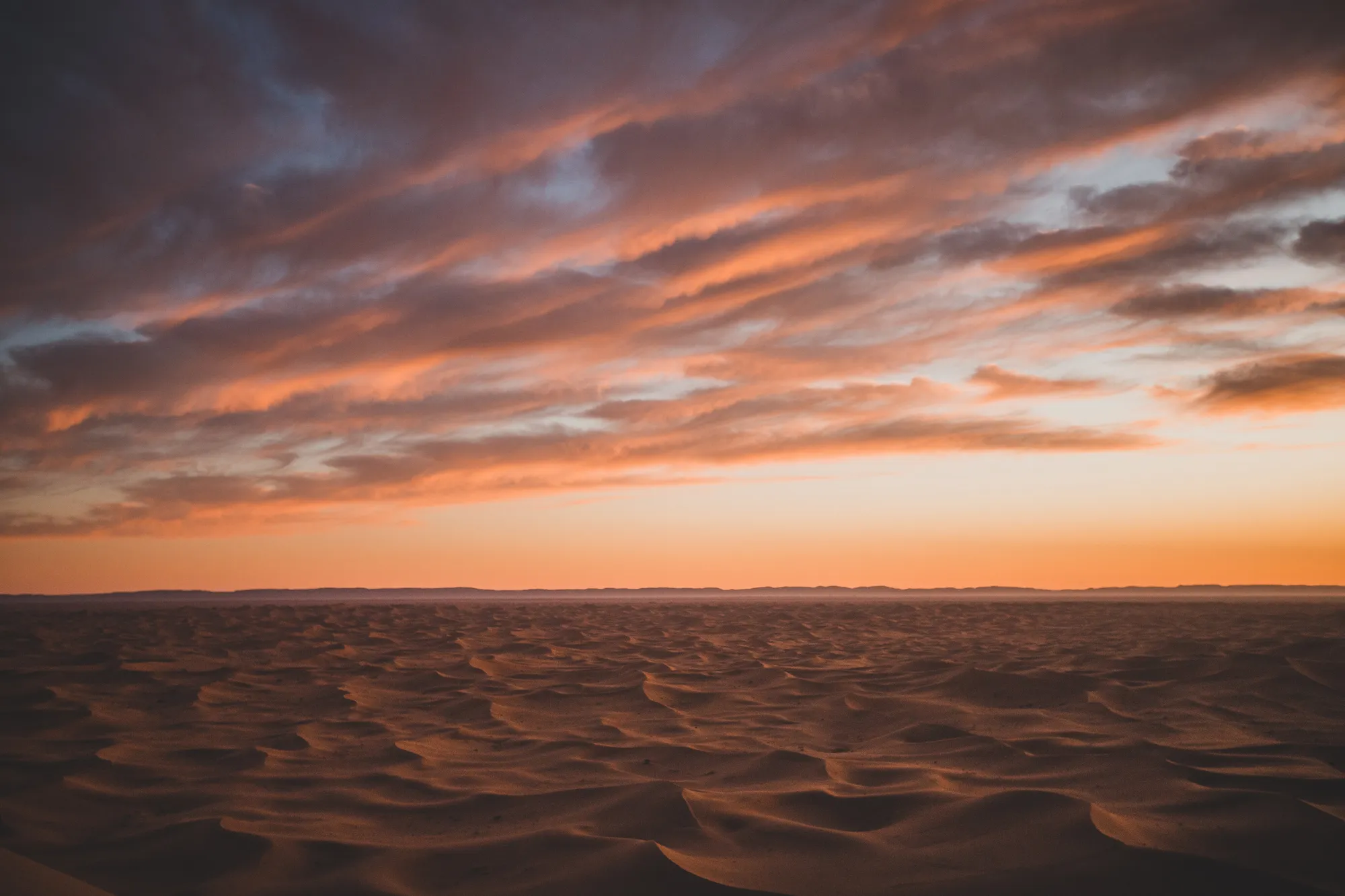
The Sahara doesn't have a bad season exactly, but it has a noticeably better one, and the difference shows up the moment the sun goes down. Daytime desert heat and near-freezing desert nights are both real possibilities depending on when you go — here's what to expect month by month, not the vague "spring and autumn are nice" answer most guides stop at.
March to May: the best all-round window
Spring gives you warm, comfortable days in the dunes and nights that are cool but manageable in a proper desert camp with blankets — closer to a crisp evening than a genuine cold snap. It's also when the High Atlas passes — including the Tizi n'Tichka you'll cross to get there — are reliably clear of snow, so the drive itself is as easy as the destination. This is the season we get the most repeat questions about camel trek timing, since sunset rides are simply pleasant rather than a race to get everyone out of the heat before dark.
June to August: hot, but not a dealbreaker
Merzouga regularly hits 40°C+ in midsummer, and standing in the open dunes at midday is genuinely punishing — not the kind of heat you push through on stubbornness alone. It's still workable if you plan around it: camel treks happen in the cooler evening rather than the afternoon, and a desert camp night still cools down noticeably once the sun's fully gone. If you're set on summer travel, consider our shorter 3-day desert tours over longer ones, so you're spending less total time in the worst of it rather than four or five days baking through the hottest stretch of the year.
September to November: our second recommendation
Autumn mirrors spring closely — warm days, cool nights, clear mountain passes — with the added bonus of noticeably lighter traffic on the road between Ouarzazate and Merzouga as the summer crowds thin out. Early September can still run hot, carrying over some of summer's intensity; by October the temperature has settled into something consistently comfortable, and it stays that way through most of November.
December to February: cold nights, clear skies
Winter days in the desert are often pleasantly mild — jacket-off by midday, most of the time — but nights at a Sahara camp can drop close to freezing, cold enough that you'll want more than the blanket alone. It's one of the best times of year for stargazing: the same clear, dry air that lets the temperature fall also means almost no cloud cover between you and the sky. Pack real layers, though — this is the one season where a light jacket alone won't cut it. See our Morocco in winter guide for exactly what to bring.
For context on the wider Sahara's climate patterns beyond just the Erg Chebbi region our routes visit, Wikipedia's overview of the Sahara is a useful primer on why the desert swings so hard between day and night temperatures. It comes down to the sand itself: unlike soil or water, it has almost no capacity to retain heat, so the moment the sun drops below the horizon, that heat radiates straight back out into a clear sky with nothing to hold it in.
Related reading
6 min readCamel Trekking in Merzouga: What Actually Happens on a Desert Camp Night
A walk-through of what a Merzouga camel trek and Sahara desert camp night actually involve, from sunset ride to sunrise over the dunes.
5 min readWhat to Pack for a Sahara Desert Tour in Morocco
A practical packing list for a Merzouga desert camp night — clothing layers, sun protection, and the small items people forget.
 6 min read
Marrakech to Sahara Desert: How to Get There and What to Expect
The real route from Marrakech to the Erg Chebbi dunes — the Tizi n'Tichka pass, Aït Ben Haddou, the gorges, and how long the drive actually takes.
Begin your journey
Ready to see this in an itinerary?
Browse all 33 private Morocco journeys, or message us with your dates for a route built around this trip.